
Feed Pelleting Guide
A pellet mill that runs fine on Monday can fill the screener with fines by Wednesday, and the cause is rarely the pellet mill alone. Pelleting is a chain of steps, and each one sets up the next. When grind, steam, die and cooler work together, animal feed pellets come out hard, uniform and ready to ship. When one link slips, you pay for it in rework, lost throughput and customer complaints.
This guide walks through the full feed pelleting process, from the hammer mill to the bagger, and points to the fix for the most common production problems. Uniscope has supplied pelleting aids and in-mill technical support to feed manufacturers since 1975, and this is the overview our team starts with on every mill visit.
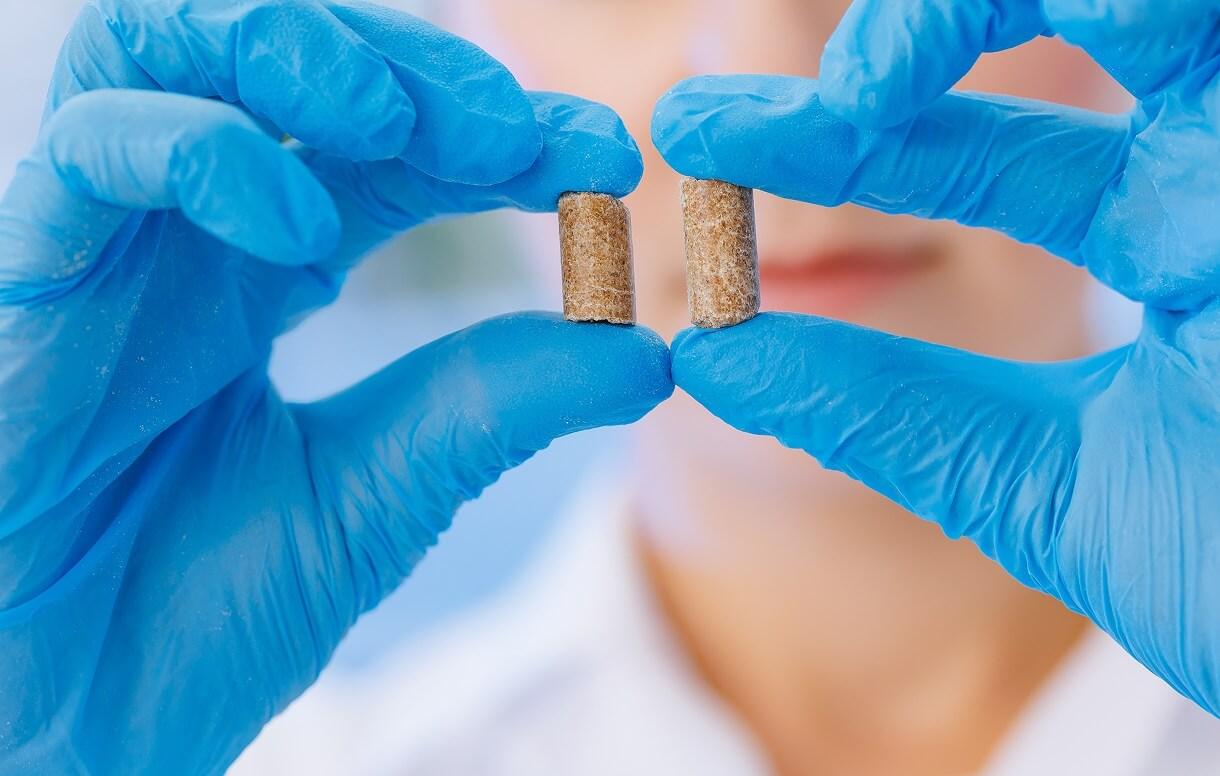
What Is Pelleting, and Why Do Feed Mills Pellet Feed?
So, what is pelleting? Pelleting is the process of compressing a conditioned mash of ground ingredients through the holes of a die to form dense, uniform pellets. Heat, moisture and pressure bond the particles together, and the pellets are then cooled and dried so they hold their shape through storage and delivery.
Mills turn mash into pellet feed because the format solves problems that loose feed cannot. Good pellets reduce feed waste, dust, selective feeding and nutrient segregation, and in poultry, better pellet quality supports bird performance. For the mill, pelleted feed also flows and handles better in bins, trucks and feeders than a fluffy mash.
The tradeoff is that pelleting adds cost and complexity. Steam, energy, die wear and rework all go on the ledger, which is why mills spend so much effort getting the process right.
The Feed Pelleting Process, Step by Step
Every mill runs its own equipment, but the feed pelleting process follows the same basic sequence. If you are new to the floor or training new staff, this is how to make feed pellets from raw ingredients to finished product.
1. Grinding
A hammer mill or roller mill reduces grains and other ingredients to a target particle size. Finer, more uniform particles give steam more surface area to work on and pack together more tightly in the die. A coarse or uneven grind leaves weak points where pellets crack later.
2. Mixing
Ground ingredients, minerals, liquids such as fat or molasses, and dry additives are blended into a uniform mash. This is also where most binders go in. Lubricants like Super-Lube and anti-bridging agents like Bin-Aid are added at the mixing stage, before the mash reaches the conditioner.
3. Conditioning
The conditioner adds steam to the mash, raising its heat and moisture before it enters the pellet mill. Heat and moisture soften the particles, start to gelatinize starch and activate natural binders in the formula. Retention time matters, since the mash needs long enough in the conditioner for steam to penetrate.
Conditioning has a large effect on durability. In one study, raising conditioning temperature from 60°C to 90°C lifted pellet durability from 85% to 91%.
4. The Pellet Mill and Die
Rollers inside the pellet mill press the conditioned mash through the holes of a die. The die’s hole size and thickness (often described as its length-to-diameter ratio) set how much compression the feed receives. More compression usually means a harder pellet, but it also means more friction, more heat and a slower production rate. Knives on the outside of the die cut the strands to length.
5. Cooling and Drying
Pellets leave the die hot, moist and soft. A cooler pulls ambient air through the bed to remove heat and moisture so the pellets harden. A common rule of thumb is that cooled pellets should run no more than 5°C above ambient temperature and within 0.5% of the original mash moisture. Pellets that leave the cooler too warm or too wet can soften, mold or break down in storage.
6. Crumbling, Screening and Load-Out
Some feeds, such as starter rations for young animals, pass through a crumbler that breaks pellets into smaller pieces. All finished pellets then cross a screener that removes fines, which go back to the pellet mill as rework. The cleaner the product leaving the screener, the fewer fines your customer finds at the bottom of the bag.
What Affects Pellet Quality?
Pellet quality comes down to how well feed pellets hold together from the cooler to the feeder. Every step above plays a part, and the biggest levers are:
- Formulation: Fat, fiber, and urea all make a ration harder to bind. Kansas State University research found pellet durability dropped 10% to 14% for each 1% of added fat in energy-balanced diets.
- Particle size: A coarse or uneven grind leaves weak points where pellets crack, and durability swings from batch to batch.
- Conditioning: Too little heat or moisture keeps particles from bonding, which shows up as soft pellets and extra fines downstream.
- Die specifications: A worn die or the wrong compression for the formula produces uneven pellets and slows output.
- Cooling and handling: Too little cooling time leaves moisture inside, and rough transfers snap pellets before they reach the bag.
Common Pelleting Problems and How to Fix Them
Most pelleting problems show up in one of four places: the screener, the pellet mill’s amperage, the holding bins or the customer’s yard. Start with process adjustments, since those levers are already in your hands. When the formula itself is the problem, an additive matched to the issue finishes the job.

Fines and Poor Durability
What you see: Extra fines at the screener, rising rework and pellets that crumble during transfer.
Common causes: High-fat or high-fiber rations, under-conditioned mash, a coarse grind or rushed cooling.
The fix: Check conditioning and grind first. If the ration still resists binding, add a binder sized to the formula. Compare the full Uniscope binder line, including:
- Super-Bind, a lignin sulfonate binder that works on all feed types, including high-grain, high-fat and distillers rations.
- Pel-Aid, a low-inclusion gelatin binder that also lubricates. It melts in the conditioner and sets as the pellet cools, which suits pet food, rabbit and specialty feeds.
- Starch Binder, a natural modified starch that dissolves quickly in steam. Mills use it in high-grain, high-fat and aquaculture feeds.
Hard-to-Pellet Feeds, Friction Heat and Slow Throughput
What you see: High pellet mill amperage, scorched or heat-damaged feed, chokes and a production rate well below target.
Common causes: Swine starters with whey and sugar, or high-fiber, high-urea or high-mineral rations, and heat-sensitive feeds. These formulas create friction in the die, and friction turns into heat, energy cost and wear on the die and rollers.
The fix: Super-Lube is a dry lubricant added at the mixer for hard-to-pellet feed. It helps material move through the die so you can raise production rates and can lower pellet mill amperage. Unlike adding fat or oil for lubrication, it does so without sacrificing pellet quality.
Die wear also has mechanical causes, such as roller adjustment and die condition, that no additive fixes. Uniscope technical support addresses mechanical, steam and formulation problems on the mill floor.
Bridging in Bins and Trucks
What you see: Pellets that hang up in holding bins, slow load-out and sticky feed that will not flow from bulk trucks.
Common causes: Pellets with urea or high levels of molasses or high humidity areas.
The fix: Bin-Aid is an anti-bridging agent added at the mixer. It liquefies during pelleting, reduces friction heat at the die and leaves a film on the pellets so they are less sticky and flow from bins and trucks.
Pellets That Break Down in Weather
What you see: Range cubes, pressed blocks or wild game pellets that soften and crumble after rain or humidity, or high-fat pellets that weep in summer.
The fix: Uni-Bond is a low-inclusion water repellent binder that improves the hardness, durability and moisture resistance of pellets, cubes and blocks.
Binders, Lubricants and Conditioners Explained
Pelleting aids fall into a few families, and each one does a different job in the pelleting process:
- Binders strengthen the bond between particles so pellets resist breaking. Lignin sulfonate, gelatin, and starch each suit different rations and inclusion levels. For blocks and cubes, Molastik is a molasses-binding agent made for those formulas.
- Lubricants reduce friction in the die. That can raise production rates on hard-to-pellet feeds and reduce the heat that builds up when a ration fights the die.
- Anti-bridging agents keep finished pellets flowing through bins, hoppers and trucks.
- Water repellent binders protect pellets, cubes and blocks fed outdoors.
- Grain conditioners improve processing for steam-flaked and rolled grain. EZ-Mill-F is Uniscope’s grain conditioner for flaked and rolled grain programs.
The right choice depends on the ration, the equipment and the problem you are trying to solve. Browse the full range of Uniscope animal feed additives to compare them.
Pelleting Considerations by Species
Each species brings its own formulas and its own pelleting challenges. A few to plan for:
- Ruminant: Range cubes, pressed blocks and rations heavy in urea, molasses or distillers grains test both binding and flow.
- Poultry: Pellets and crumbles must survive conveying to the feeder line, since fines in the pan mean wasted feed.
- Swine: Starters with whey and sugar are among the hardest feeds to pellet without heat damage.
- Aquatic: Pellets must hold together in water long enough to be eaten, so water stability is the key quality target.
- Equine: High-fat horse feeds need extra help to stay durable.
- Pet: Pet food and treats call for binding that also supports palatability.
- Wild Game: Feeds set out in the field need to stand up to weather.
Get Pelleting Help From Uniscope’s Technical Team
Uniscope specialists work the line with your crew before they recommend a product. Our feed mill services include:
- Pelleting education: An hour-long presentation based on our Guide to Feed Pelleting Technology booklet, covering the pelleting process from ingredient selection through production. It is built for training feed mill personnel.
- Feed mill evaluations: A third-party inspection of the entire facility, the process flow from raw ingredients to finished feed and your quality control procedures, followed by a detailed report with an overall quality rating and areas to improve.
- Troubleshooting support: Help with mechanical, steam and formulation problems to reach your production and quality targets.
Prefer to work through a local supplier? Find a Uniscope distributor near you.
Feed Pelleting Questions
What is pelleting in feed manufacturing?
Pelleting compresses a steam-conditioned mash of ground ingredients through a die to form dense, uniform pellets. The pellets are then cooled and dried so they hold their shape through handling and delivery.
How do you make feed pellets?
Grind the ingredients, mix them into a uniform mash, condition the mash with steam, press it through the pellet mill die, then cool, screen and load out the finished pellets. Fines removed at the screener go back to the pellet mill.
Why do feed mills pellet feed instead of selling mash?
Pellets reduce waste, dust, selective feeding and ingredient separation to sures that every bite has the formulated amount of vitamins and minerals. They flow and handle better in bins and feeders. Many producers also see better animal performance on quality pellets.
What does conditioning do in the pelleting process?
Conditioning adds steam to the mash.ypically the higher the temperature the more both natural and added binders will activate and form a a stronger bond and improves durability.
How does fat affect pelleting?
Added fat lubricates the die but weakens the bond between particles, so high-fat rations usually produce softer pellets with more fines. A binder can offset that loss of durability as fat lubricates the die it reduces the compaction resultings in lower PDI’s.
What is the difference between a binder and a lubricant?
A binder strengthens pellets so they resist breaking. A lubricant reduces friction in the die, which helps hard-to-pellet feeds run faster and cooler. Some products, like Pel-Aid, do both. A lubricant can also help in the starting of a feed run when burning or high amps occur.
Does Uniscope offer pelleting training for mill staff?
Yes. Uniscope offers an hour-long presentation based on its Guide to Feed Pelleting Technology booklet that covers the pelleting process from ingredient selection through production.
Train Your Team or Evaluate Your Mill
Bring the Guide to Feed Pelleting Technology presentation to your mill, or schedule a third-party feed mill evaluation with a written report on where your process can improve. Tell us about your mill and your goals, and a Uniscope specialist will follow up.
CONTACT US
Let us know if you have any questions and we will get back with you as soon as possible.
CONTACT information
ADDRESS
172 Cross Street, Juneau, WI 53039
PHONE
970 587 4614